The purpose of this website: helping you learn to play the piano. Building a strong foundation of piano-playing skills will lead to a lifetime of piano-playing joy.
Know The Key Signatures
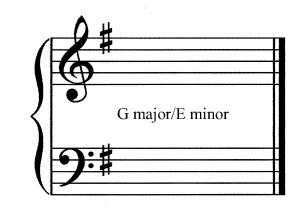
Key signatures are essentially labels which tell musicians what scale, or scales, a composer used to build a piece of music.
To really know each key, you must know the scale it represents. Thus, keys and scales should be learned together. (The study of keys and scales and chords on the piano provides a great illustration why the piano is the best possible instrument for teaching and/or learning the foundational elements of music theory. With the piano, the images are clear and distinct. Every scale and chord and key can be pictured on the keys of a piano more easily and comprehensibly than on any other instrument. A piano player can improve all areas of his/her understanding of music theory, while at the same time mastering the geography of the keyboard. These things will only make the pianist more capable in all areas of piano music: reading music, memorizing music, and especially improvising and composing.)
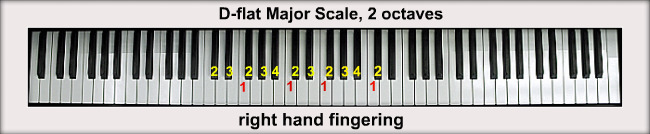
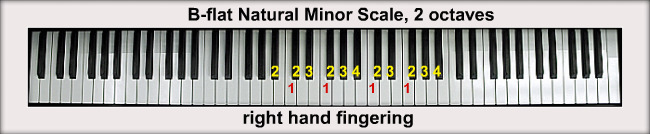
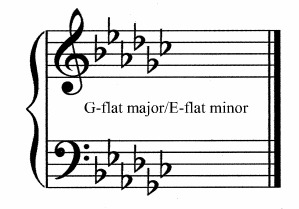
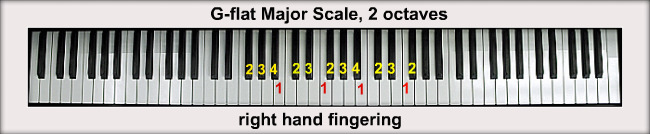
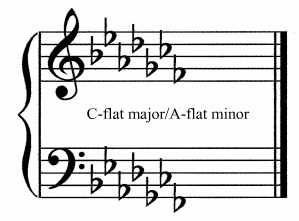
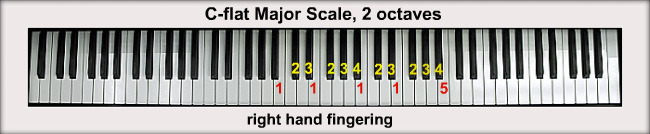
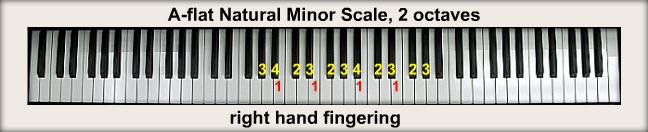
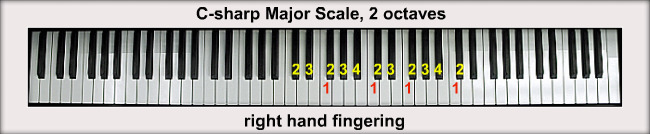
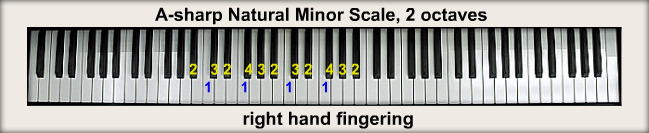
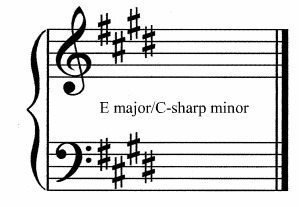
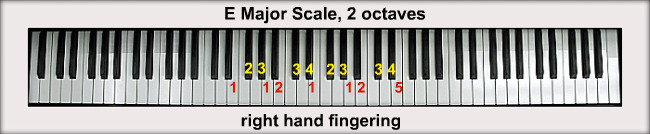
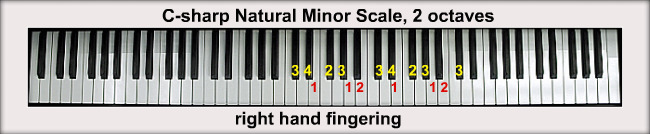
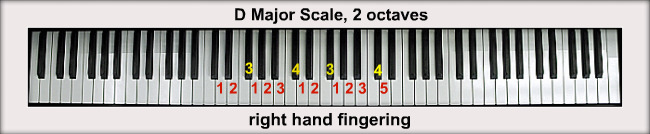
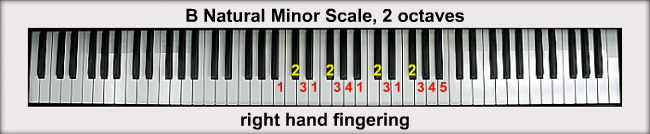
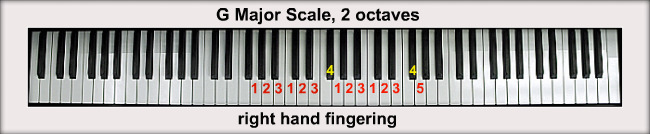
Here you will find each key listed with a picture of the major scale and the minor scale it represents. (Right hand fingering for pianists is included.) For more on scales, go to "Piano Scales" .
Once you've learned and mastered the scale for each key, it will make more sense. Playing a piece of music becomes easier when you already "know" the key in which it is written.
For a more complete understanding of how to build your piano-playing foundation, read
For the most direct, organized, and progressive path to learning to play the piano, start
the Piano Skills Foundation series of piano lessons.
(Advertisement)
Some "Tricks" For Figuring Out Key Signatures
All instrumentalists should have the keys and scales memorized. However, if one cannot think of any particular key, here are a couple of tricks.
Sharp Keys:
-The last sharp listed (going from left to right) is always the 7th note of the major scale. Therefore, naming the note a half-step up from the last sharp will give you the key. (A whole-step down from the last sharp will give you the minor key.)
Flat Keys:
-The next-to-last flat (from left to right) is the key. (This applies to all flat keys, except the key of F which only has one flat.)
Minor keys are always the sixth note of the major scale.
The Keys:
C Major/A minor
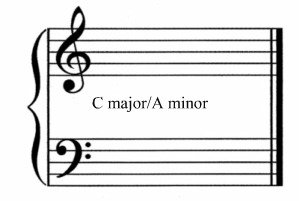
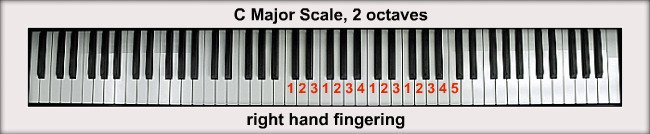
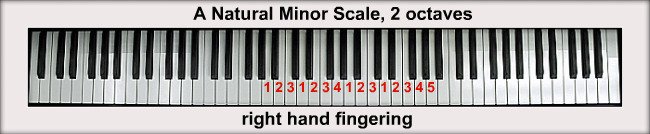
F Major/D minor
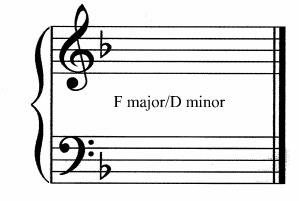
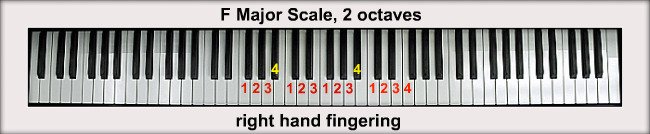
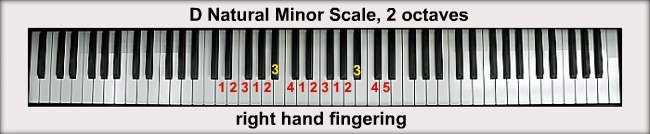
B-flat Major/G minor
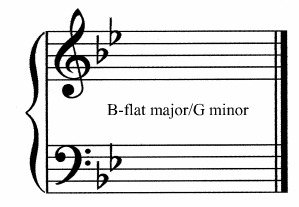
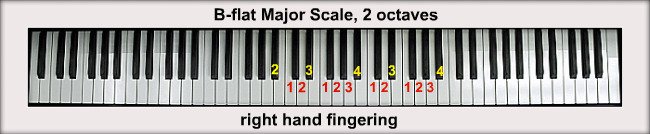
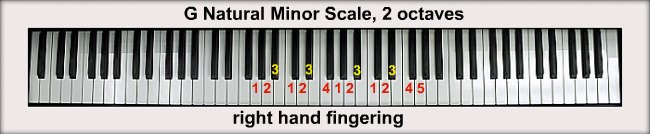
E-flat Major/C minor
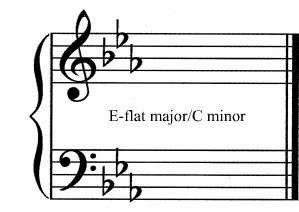
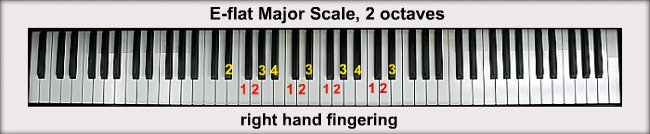
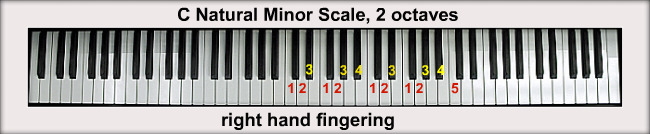
A-flat Major/F minor
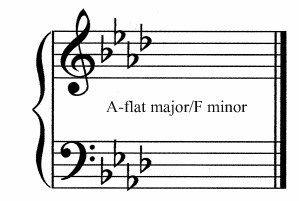
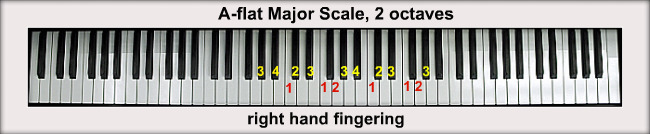
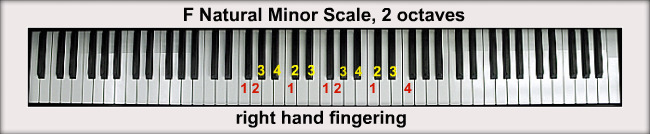
D-flat Major/B-flat minor
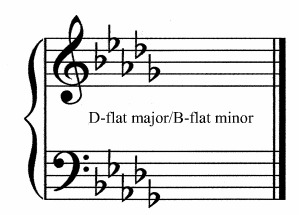
G-flat Major/E-flat minor
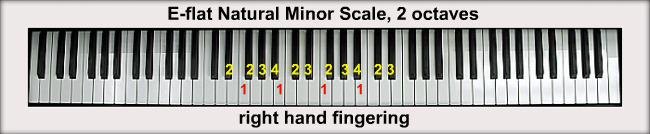
C-flat Major/A-flat minor
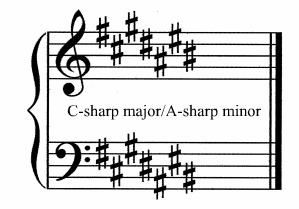
C-sharp Major/A-sharp minor
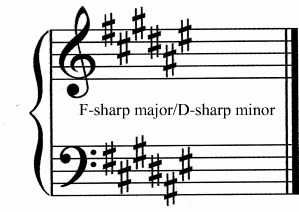
F-sharp Major/D-sharp minor
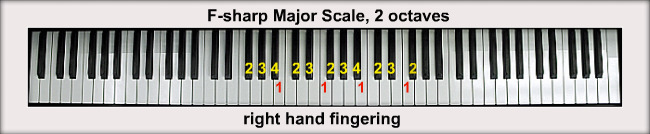
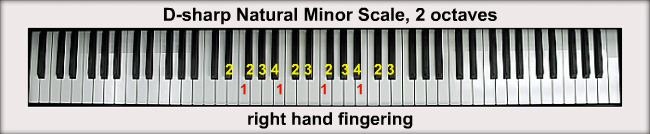
B Major/G-sharp minor
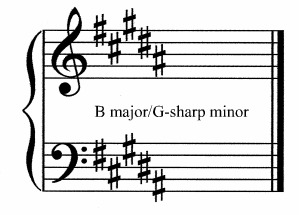
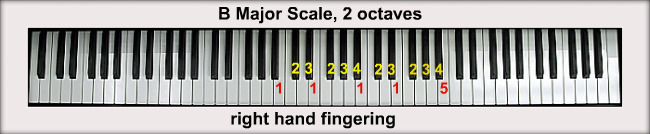
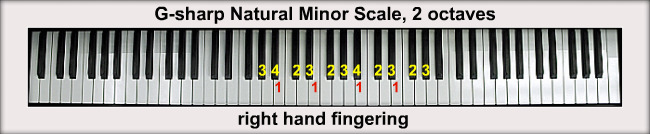
E Major/C-sharp minor
A Major/F-sharp minor
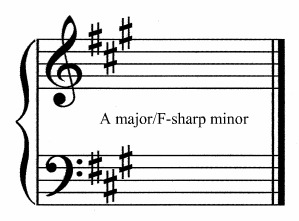
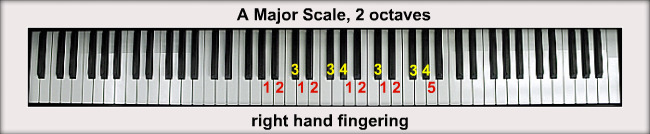
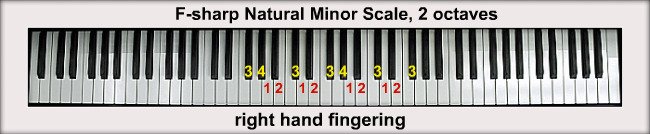
D Major/B minor
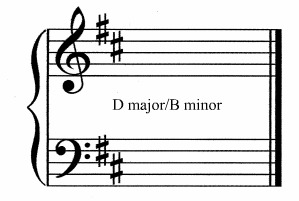
G Major/E minor
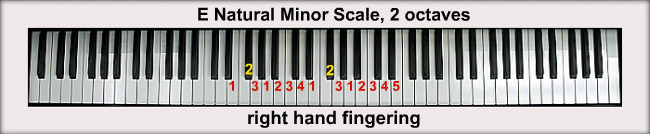
This is just one topic of many from the wonderful world of music theory.
-click here for about music theory-
If you want to see a blueprint for a successful piano journey...
read
"Piano Player... You"
A guide to building a solid and complete piano-playing foundation.
-Click here to learn more about this e-book-
If you would like a step-by-step guide to help you on your piano journey...
start working through
"The Piano Skills Foundation" piano lessons
-Click here to learn more about this piano course-
Return from "Key Signatures" to "Piano Scales"
Looking for some piano music?
I have found Sheet Music Plus to be a fantastic resource for piano books & other materials. And they have instant digital downloads for thousands of individual pieces.
3 Ways To Support This Website
If you enjoy using true-piano-lessons.com and would like to help support it:
1. Buy the ebook, "Piano Player... You"
2. Purchase "Piano Skills Foundation"
3.Donation
(Advertisement)
